
Models, specifications and applications
Model names, units, market versions and configuration conditions need to stay together. These published manufacturer examples show how we organize technical product content.
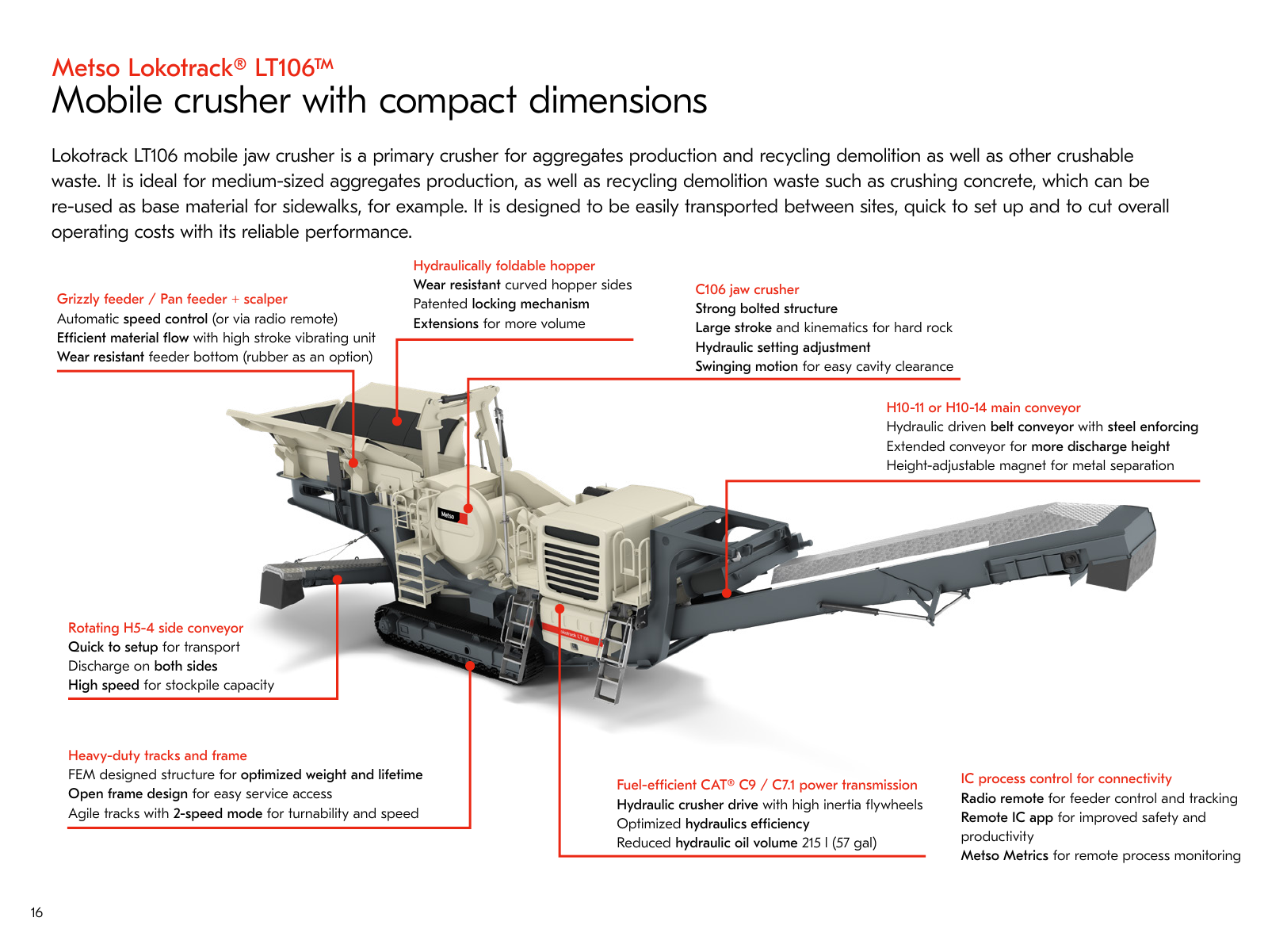
| Brand and model | Specification | Published value |
|---|---|---|
| Metso Lokotrack LT106Global brochure, revision 11/2024, p.28Manufacturer source | Feed opening | 1,060 × 700 mm |
| Transport weight | 42,000 kg | |
| Transport length | 15,300 mm | |
| Transport width | 2,800 mm | |
| Feed hopper volume | 6 / 9 m³ | |
| Metso Lokotrack LT120Global brochure, revision 11/2024, p.28Manufacturer source | Feed opening | 1,200 × 870 mm |
| Transport weight | 62,600 kg | |
| Transport length | 16,650 mm | |
| Transport width | 3,000 mm | |
| Feed hopper volume | 7 / 12 m³ |
Metso Lokotrack LT106:Transport data follows the November 2024 brochure; hopper volume shows two configurations. Primary crushing of aggregate and recycling feed, with material, feed-size and transport details on the website.
Metso Lokotrack LT120:Feed opening describes the machine opening; allowed feed size and output also depend on material and CSS. A quarry primary-crushing reference; plant content should explain prescreening, metal removal and downstream screening.
Sources checked: 2026-09-21 · Published models illustrate specification and content work. Client projects use the models and documents in the client’s actual range.
Application, configuration and quotation content
- Feed material, target output and product size
- Feeding, prescreening, conveyors and metal removal
- Diesel/electric drive and regional emissions version
- Jaw materials, spare-parts scope and delivery location
We turn these questions into model-page content, technical documents and enquiry fields so sales receives the equipment, operating and delivery requirements together.
Keywords, intent and destination pages
Equipment businesses finding our services
website design for mobile crusher manufacturers; SEO for crushing and screening companies; GEO services for jaw crusher exporters; content marketing for quarry equipment businesses
These searches lead to this industry page and our website, SEO and GEO service pages. Business owners can review the work and submit their own website and product range.
Equipment purchasing queries for client websites
| Stage / query | Buyer intent | Content and target page | Enquiry action |
|---|---|---|---|
| Process choice mobile jaw crusher for granite primary crushing | Establish rock characteristics, feed and primary-crushing duty | Granite primary-crushing application | Send feed photos, size and desired product |
| Equipment comparison LT106 vs LT120 feed opening transport weight | Separate opening from rock size and compare transport needs | Sourced model comparison | Provide route and site constraints |
| Capacity assessment jaw crusher capacity closed side setting hard rock | Understand CSS, feed grading and prescreening effects | Process explanation and configuration questionnaire | Submit grading, hourly target and shifts |
| Quote and wear parts mobile jaw crusher price with spare jaw plates | Check plant, screening/conveying and wear-part scope | Plant configuration and jaw-wear page | Request separate equipment and spare-parts lists |
AI purchasing prompts and content preparation
These purchasing questions can be tested in ChatGPT, Gemini and AI search experiences. Record the platform, date, region, full response, suppliers mentioned and cited URLs, then compare the findings with the client’s published content.
Compare a mobile jaw crusher with a 1,060 × 700 mm opening and one with a 1,200 × 870 mm opening for quarry primary crushing. Which feed, CSS and transport details are needed before estimating output?
- What to observe
- Check for confusion between opening and allowed feed size, or unsupported output claims
- Supporting page content
- Dimension definitions, feed questionnaire, CSS explanation and transport table
For concrete demolition recycling, what should I ask a mobile jaw-crusher supplier about reinforcement, metal separation, fines removal, dust management and replacement jaw dies?
- What to observe
- Check that recommendations address reinforcement, metal removal and fines
- Supporting page content
- Recycling flow, option explanations and liner-maintenance documentation
How should I compare quotations for a quarry crushing plant, including the jaw unit, feeder, conveyors, screening, wear parts and the material assumptions behind stated tonnes per hour?
- What to observe
- Check whether plant capacity is misrepresented as a machine guarantee and identify output assumptions
- Supporting page content
- Feed-condition sheet, equipment scope, plant interfaces and quotation exclusions
Optimization work and execution sequence
| Stage | Actions | Deliverable |
|---|---|---|
| Week 1: map machines to applications | Check crushing units, engines/electric drives, liners and conveyor options; collect actual project material for different rock and recycling feeds. | Configuration register and application assets |
| Week 2: research process queries | Map material, product-size, mobility and wear terms to application, model and parts pages; identify the missing conditions in capacity questions. | Keyword map and capacity-question brief |
| Weeks 3–5: publish comparable information | Publish opening/transport data with sources, draw the client's actual plant connections and add feed and output-target fields to inquiries. | Equipment pages, application pages and plant questionnaire |
| Monthly: distribute application content | Produce four posts on feed, prescreening, relocation and liner wear, with eight Facebook/LinkedIn publications; support useful process/equipment articles through 60 recorded backlink publications. | Four post assets, eight publication records and a link register |
| Month-end and quarterly: review lead sources | Separate material and machine terms in monthly reporting; qualify leads by feed, output and site, then revise topics that attract visits without purchasing follow-up. | Monthly report, project-lead list and quarterly content revisions |
Monthly reporting separates queries and rankings, GSC impressions and clicks, website visits, contact clicks, saved enquiries, social placements and external publishing. Quarterly reviews explain the changes and set page and content priorities.
How clients and buyers find the site and enquire
| Channel | Query or prompt | Landing page | Next action |
|---|---|---|---|
| SEO services for crushing and screening manufacturers | Our mobile-jaw-crusher service page | Manufacturer submits its website and main machines | |
| Google / AI search | mobile jaw crusher granite capacity CSS | The client's material application or CSS guide | Review options and submit plant requirements |
| LinkedIn / Facebook | Crushing-process and relocation posts | Tagged links to the client's project page | Enter quotation flow with source attribution |
Facebook and LinkedIn content operations
The standard service produces 4 image-and-text posts a month and publishes them 8 times across Facebook and LinkedIn. Topics draw on technical articles, product pages and sales material, with destination URLs and channel tags recorded.