
Models, specifications and applications
Model names, units, market versions and configuration conditions need to stay together. These published manufacturer examples show how we organize technical product content.
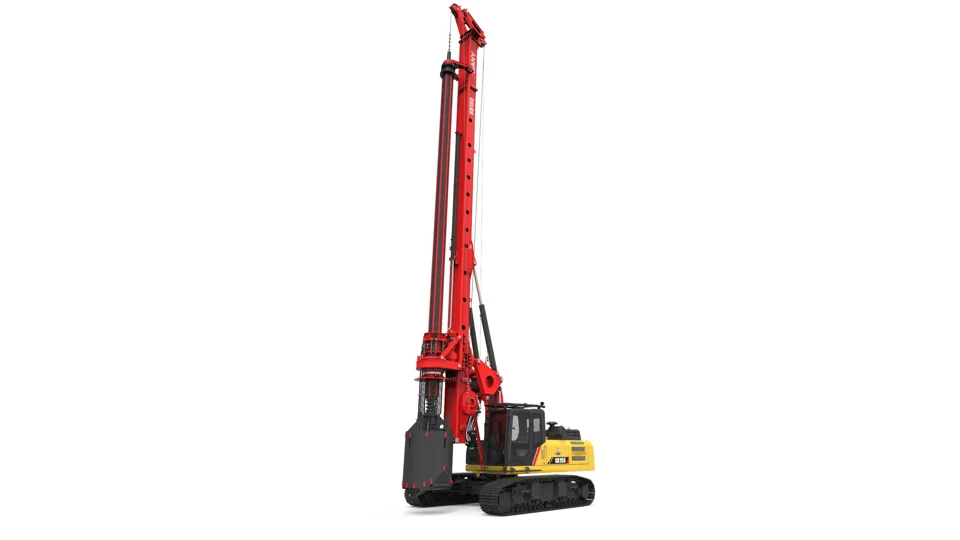
| Brand and model | Specification | Published value |
|---|---|---|
| SANY SR155-C10SANY Global / China Stage III configurationManufacturer source | Maximum pile diameter | 1,500 mm |
| Maximum pile depth (published pair) | 55 / 44 m | |
| Rated output torque | 155 kN·m | |
| Engine power/speed | 147 kW / 2,100 rpm | |
| Operating weight | 48 t | |
| SANY SR285R-C10SANY Global / China Stage III configurationManufacturer source | Maximum pile diameter | 2,300 mm |
| Maximum pile depth (published pair) | 94 / 61 m | |
| Rated output torque | 285 kN·m | |
| Engine power/speed | 300 kW / 1,800 rpm | |
| Operating weight | 100 t |
SANY SR155-C10:Maximum depth retains the OEM's 55/44 m pair and depends on Kelly-bar configuration. Bored foundation piles; selection content should connect ground conditions, diameter, depth and Kelly-bar configuration.
SANY SR285R-C10:Maximum depth retains the OEM's 94/61 m pair; selection also considers ground and tooling. A reference for larger-diameter, deeper foundations, requiring ground investigation and tooling information alongside machine size.
Sources checked: 2026-09-21 · Published models illustrate specification and content work. Client projects use the models and documents in the client’s actual range.
Application, configuration and quotation content
- Rig torque, undercarriage and emissions configuration
- Kelly-bar type, sections and usable depth
- Buckets, augers, core barrels and casings
- Disassembly, transport, destination and commissioning/training
We turn these questions into model-page content, technical documents and enquiry fields so sales receives the equipment, operating and delivery requirements together.
Keywords, intent and destination pages
Equipment businesses finding our services
website design for piling rig manufacturers; SEO for rotary drilling rig exporters; GEO services for foundation equipment companies; piling equipment website optimization
These searches lead to this industry page and our website, SEO and GEO service pages. Business owners can review the work and submit their own website and product range.
Equipment purchasing queries for client websites
| Stage / query | Buyer intent | Content and target page | Enquiry action |
|---|---|---|---|
| Supplier shortlist rotary drilling rig manufacturers China | Review manufacturing, commissioning and tooling support | Factory capability and rig range | Provide destination, contracting work and timing |
| Diameter and depth 1500 mm pile rotary drilling rig depth | Verify capability with the specified Kelly bar | Model page and Kelly-bar configuration table | Send diameter, depth and Kelly-bar needs |
| Ground conditions rotary drilling rig for hard rock foundation piles | Evaluate the formation, tool, torque and crowd system together | Ground-condition application and tooling guide | Send a ground-report summary and production requirement |
| Cost and transport rotary drilling rig price including Kelly bar tools | Separate machine, bar, tooling, transport and service cost | Configuration and quotation guide | Request an itemized foundation-project configuration |
AI purchasing prompts and content preparation
These purchasing questions can be tested in ChatGPT, Gemini and AI search experiences. Record the platform, date, region, full response, suppliers mentioned and cited URLs, then compare the findings with the client’s published content.
I need a rotary drilling rig for 1,500 mm bored piles. What ground-report details, Kelly-bar configuration, torque and crowd-force data should I provide before asking manufacturers for quotations?
- What to observe
- Check that recommendations request ground data rather than relying only on maximum diameter
- Supporting page content
- Ground-condition questionnaire, Kelly-bar selection notes, torque and crowd-force data
Compare the published SANY SR155-C10 and SR285R-C10 specifications. Explain what the paired maximum-depth figures mean for a buyer and what needs confirmation from the manufacturer.
- What to observe
- Check exact model, market, emissions version and paired depth; leave unspecified configuration for manufacturer confirmation
- Supporting page content
- Same-version model table, source links and Kelly-bar configuration record
For deep foundations in abrasive rock, how should a contractor compare drilling-tool availability, casing options, transport dimensions and commissioning support when importing a rotary rig?
- What to observe
- Check coverage of tooling wear, casings and transport/disassembly
- Supporting page content
- Tool sets, casing options, transport dimensions and commissioning deliverables
Optimization work and execution sequence
| Stage | Actions | Deliverable |
|---|---|---|
| Week 1: equipment and ground data | Collect rig, Kelly-bar, casing and tooling records, separate emissions variants and interview sales about recent ground-condition questions. | Model records, ground-condition vocabulary and technical document index |
| Week 2: build the keyword structure | Group supplier terms, diameter/depth queries, formation questions and parts terms; examine page organization on two or three industry websites. | Keyword-to-rig/application mapping |
| Weeks 3–5: publish technical content | Publish priority models and Kelly-bar selection content, then ground-condition articles; label depth configurations and render specifications as crawlable text. | Rig, Kelly-bar and ground-condition pages |
| Monthly: industry publishing | Create four posts about ground data, tooling, job records and transport, distributed eight times across Facebook and LinkedIn; record which rig/application page each of 60 backlink publications supports. | Project assets, editorial calendar and link register |
| Month-end/quarterly: assess inquiries | Report diameter-, depth- and market-related queries alongside inquiries containing ground data; review actual project leads with sales each quarter. | Monthly performance and quarterly topic revisions |
Monthly reporting separates queries and rankings, GSC impressions and clicks, website visits, contact clicks, saved enquiries, social placements and external publishing. Quarterly reviews explain the changes and set page and content priorities.
How clients and buyers find the site and enquire
| Channel | Query or prompt | Landing page | Next action |
|---|---|---|---|
| SEO agency for rotary drilling rig manufacturers | Our rotary-rig service page | The business supplies its model list and URL | |
| Google / AI search | rotary drilling rig Kelly bar depth selection | The client's Kelly-bar selection explanation | Contractor opens a rig page and provides pile requirements |
| Project articles on ground, pile diameter and tooling | The client's ground-condition page | Download a brief and start a project inquiry |
Facebook and LinkedIn content operations
The standard service produces 4 image-and-text posts a month and publishes them 8 times across Facebook and LinkedIn. Topics draw on technical articles, product pages and sales material, with destination URLs and channel tags recorded.