
An exact number can represent several buying tasks
Someone searching for 1R-0750 may be identifying an old component, checking dimensions, comparing suppliers or preparing an order. First establish which product the reference identifies, then explain the supplied brand, specifications, fitment checks, quantity and delivery. Repeating a number in titles and paragraphs cannot supply that information.
The commercial purpose is to shorten the route from a precise need to a quotable enquiry. Research combinations of the reference with product name, dimensions, supplier, replacement or availability, while keeping claims aligned with the actual offer. Photographs and a catalogue alone do not establish compatibility or stock.
Twelve real references and their search tasks
A reference is normally interpreted with the brand that owns it. Each row links to public Cat information and connects identity, query and page treatment. Dimensions retain their source units, and purchasing checks still use the actual component and equipment configuration.
1R-0750 and 1R-0749 are both secondary fuel filters, but their published diameters and lengths differ. 8E-6258 and 8E-6259 differ by one digit while identifying a pin and a retainer. Explaining these distinctions is useful part-number content.
References, facts and page decisions
| OEM reference | Identity / published specification | Example query | Page treatment |
|---|---|---|---|
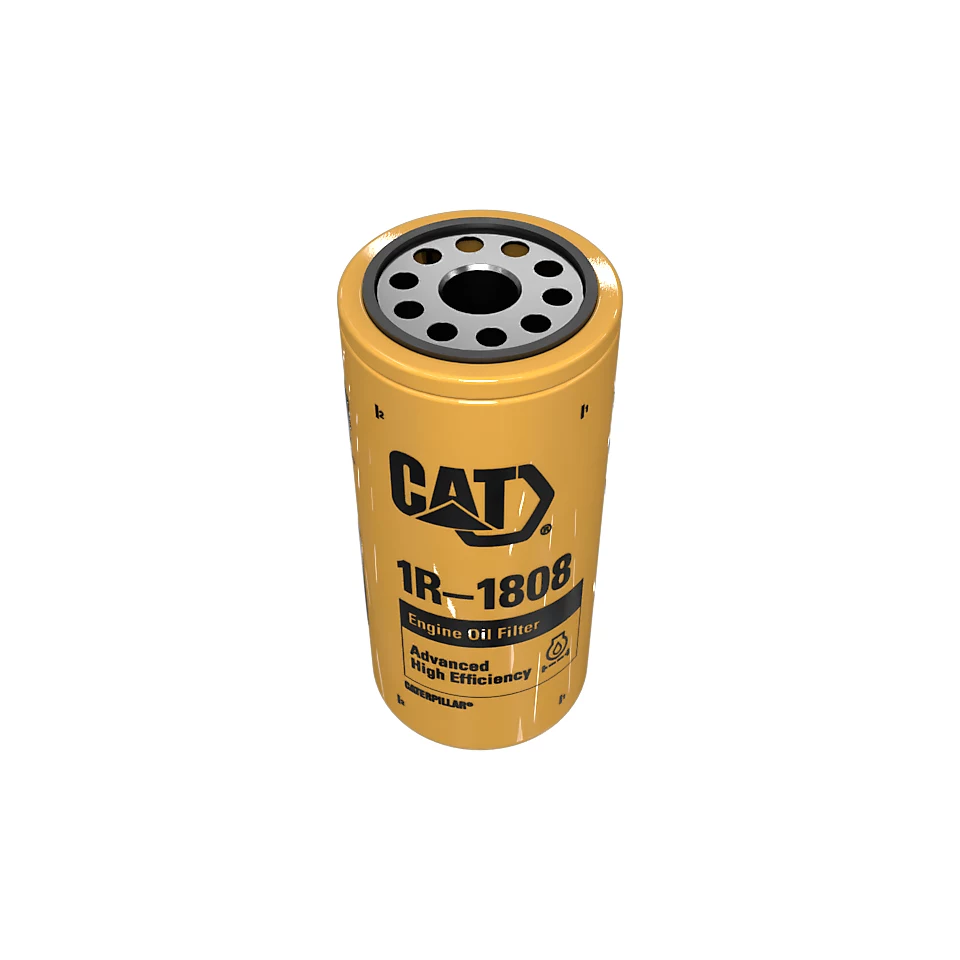
| Cat 1R-1808 | Engine oil filter; Spin-on; identified as Advanced Efficiency | 1R-1808 oil filter | Display brand and full reference prominently; distinguish engine oil from fuel and hydraulic filtration |
| Cat 1R-0750 | Secondary fuel filter; Diameter 3.374 in; length 7.146 in | 1R0750 fuel filter dimensions | Let 1R0750 resolve to the same record while publishing 1R-0750 and the sourced dimensions |
| Cat 1R-0749 | Secondary fuel filter; Diameter 3.689 in; length 10.571 in | 1R-0749 vs 1R-0750 | Keep distinct product identities; a comparison explains documented differences and remaining checks |
| Cat 326-1643 | Fuel/water separator filter assembly; Spin-on; a separate family from engine oil filters | 326-1643 water separator | Identify fuel/water separation rather than using an undifferentiated filter title |
| Cat 093-7521 | Hydraulic/transmission oil filter; Standard Efficiency; retain the leading zero | 0937521 hydraulic filter | Preserve the leading zero in records and imports; the unhyphenated form is an alias |
| Cat 1U-3252 | J250 general-purpose bucket tip; J Series; size J250 | 1U-3252 J250 tooth | Record J250 as a size field and link the appropriate category |
| Cat 1U-3302 | J300 general-purpose bucket tip; J Series; size J300 | 1U-3302 J300 bucket tooth | Maintain the J300 record; size class does not replace installation dimensions |
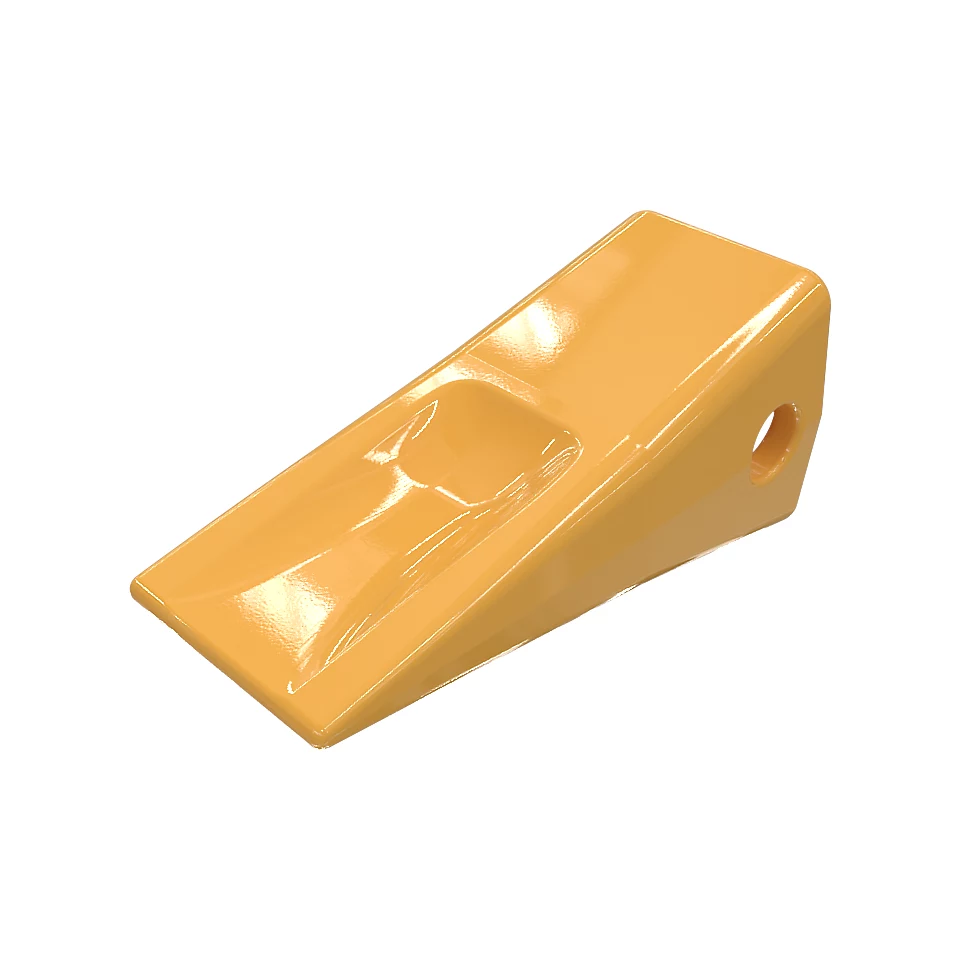
| Cat 1U-3352 | J350 general-purpose bucket tip; J Series; size J350 | 1U3352 J350 bucket tooth | Explain identity using reference, J350 and shape without stuffing a model list into the title |
| Cat 114-0358 | Grooved bucket-tip pin; A reference pin listed in the OEM data for 114-0359 | 114-0358 grooved pin | Keep a pin page with groove, dimensions and related components; do not merge it with the retainer |
| Cat 114-0359 | J350 tip-pin retainer; OEM description specifies J350 tips and adapters | 114-0359 J350 retainer | Link explicitly listed reference pins and distinguish used-with from replacement relationships |
| Cat 8E-6258 | J300 bucket-tip pin; OEM specifies J300 and use with 8E-6259 | 8E6258 J300 pin | Do not merge neighboring numbers through fuzzy matching; explain use with 8E-6259 |
| Cat 8E-6259 | Tip-pin retainer; Retainer assembly explicitly referenced by the OEM application note for 8E-6258 | 8E-6259 retainer | Maintain retainer identity; its relationship to 8E-6258 is used-with, not substitutes-for |
Keep original references and recognize search aliases
Store 1R-0750 in the product record while allowing search to recognize 1R0750 and case differences. Keep the displayed identity, official URL, internal links and sitemap stable rather than publishing a page for every spelling. Verify aliases within the same brand and product identity. Similar-result suggestions should not silently replace the buyer’s selected reference.
Store 093-7521 as text so an import does not discard its leading zero. Separate aliases, replacements and used-with references: an alias is another spelling, a replacement describes substitution, and a used-with link connects different components. The 8E-6258 application note points to 8E-6259 as a companion component, not an equivalent replacement number.
Provide several routes to one product detail
A filter category, a brand catalogue and a verified machine hub may all link to the same stable product URL. Align canonical signals where query parameters or alternate category paths only repeat that product. Preserve distinct identities for genuinely different brands, specifications or kits rather than merging them to reduce page count.
An OEM item and an own-brand replacement should not share a brand field simply because they share a cross-reference. For an own-brand J350 tooth, a title can state the supplier brand and “reference 1U-3352.” Use the actual supplied product’s brand and manufacturer number, recording the Cat cross-reference separately. Photographs should identify what the buyer will receive.
A product can have a useful RFQ page without a public price. Clear identity, evidence and a working enquiry matter more than numerous country, wholesale or cheap variations with little different information. Where a comparison is useful, connect the products through an article with documented specifications and verification steps.
Plan a complete page around the 1U-3352 reference
Start with the actual supplied brand, product name, identifiers, shape and a clear photograph. OEM information identifies 1U-3352 as a J350 general-purpose tip. A supplier should add its own item’s drawings, material or inspection evidence, unit weight, pack quantities and genuine production or dispatch material. Collect missing facts rather than filling the table with invented values.
The fitment area explains the adapter and retention system and can link to pins, retainers or installation instructions. The enquiry retains the product and reference and asks for quantity, destination and date. Explain how to submit old-part photographs, adapter images or drawings when needed. Repair buyers and bulk distributors can use the same product page with different quotation requirements.
Evidence needed on a reference page
| Page area | Information | Buyer task |
|---|---|---|
| Identity | Actual brand, name, seller SKU, manufacturer number and OEM reference | Confirm which product the supplier is offering |
| Images and specifications | Product and packing photographs, dimensions with units, material evidence and source date | Distinguish similar components and support technical verification |
| Fitment and related items | Machine, assembly and serial conditions; separate used-with and replacement links | Avoid treating suggested products as proof of fit |
| Commercial information | Actual pack quantities, quotation process, stock-check date and delivery terms | Prepare a request sales can process |
| Enquiry | Product and reference, quantity, destination, required date and supporting files | Turn a visit into a traceable business request |
Give search engines the same product facts as buyers
Visible content, image descriptions, breadcrumbs, URL, canonical and structured data should describe one actual product. In Product data, sku is the seller SKU, mpn identifies the actual manufacturer’s part, and brand names the supplied product’s brand. Keep OEM cross-references separate. Do not invent a GTIN or treat an arbitrary reference as a barcode.
Google’s Product search features have specific data requirements. An RFQ page should not invent an Offer, a zero price or reviews to meet them. Complete visible information first, then add markup reflecting real data. This website publishes the present guide as an Article, not as a collection of products offered for sale.
After publication, distinguish unknown URLs, fetch problems, duplicate consolidation and indexed pages. Indexing does not establish rankings or enquiries. GSC does not expose every low-volume query; combine reported reference queries with landing-page, site-search and enquiry evidence instead of interpreting an absent query as zero demand.
Reuse reference information for social and AI questions
Four monthly posts could explain the dimensions of 1R-0749 versus 1R-0750, J250/J300/J350 identification, the relationship between 8E-6258 and 8E-6259, and packing checks on an actual order. Use photographs and technical evidence, linking to the relevant product or comparison. Existing Facebook and LinkedIn pages support eight placements; otherwise prepare the assets and manual publishing sequence first.
Use the purchasing prompts below to test whether an AI answer understands identity, specifications and relationship types. Record platform, date, language, question, answer and citations. Missing or incorrect explanations can guide improvements to the source pages. These are proposed test questions, not evidence that this website has already earned AI recommendations.
Choose the next references from business evidence
Prioritize references appearing in real enquiries, with reliable supply and available identification records. Map each number to target queries, a canonical URL, missing evidence and an owner. Complete product identity, content, links and enquiries, then report visits, submissions, fitment confirmation, quotations and orders as distinct stages.
UEESHOP helps equipment-parts exporters organize this map, build new parts websites or improve existing catalogues through Google SEO, GEO and content operations. The starting point is a real product list and enquiry history, with useful commercial outcomes guiding expansion.
Execution sequence and deliverables
| Stage | Work | Output |
|---|---|---|
| Reference review | Verify brand, original number, aliases, seller SKU and relationship types | A traceable reference register and evidence gaps |
| Page planning | Map canonical product pages, categories and useful identification or comparison content | Queries, URLs, data fields and internal links |
| Launch checks | Check readable content, canonical identity, enquiries and truthful structured data | Published pages, accurate records and a working enquiry route |
| Monthly iteration | Review reference entry queries, qualified enquiries, fitment questions and quotation outcomes | Priority information improvements and the next reference group |
Purchasing prompts and page work
Are 8E-6258 and 8E-6259 replacement numbers for the same part, or components used together? Use the manufacturer’s application information and explain what a buyer should verify.
Observe: The answer distinguishes pin and retainer and cites the used-with relationship instead of assuming interchangeability.
Content required: Separate product identities, sourced relationships, dimensions and assembly checks.
I found 1R-0749 and 1R-0750 secondary fuel filters. Which published dimensional differences can I compare, and what further equipment and interface information is needed before deciding fitment?
Observe: The answer retains sources and units and treats dimensions as only part of a fitment check.
Content required: Published diameter and length, actual supplied-product records, machine or engine identity and interface checks.
Common questions
Does an unhyphenated number need a separate page?
If it is a verified spelling of the same reference, search can resolve it to the same product record. Preserve the original number and verify its brand and identity rather than copying pages for punctuation differences.
Will adding another brand’s references generate enquiries?
Only use supported cross-reference or fitment relationships and clearly identify the supplied brand. The reference helps discovery; specifications, supply information and quotation handling still determine usefulness.
Can an RFQ-only site use part-number SEO?
Yes. Provide complete product information and a useful enquiry route. Price and rich-result fields should reflect real data; do not invent prices, stock or reviews.
References: Google: canonical URLs and duplicate content / Google: Product snippet structured data / Google: helpful, reliable content