
Establish what 1,200 SKUs actually represent
A seller SKU may represent one piece, a carton, a kit, a warehouse record or a localized entry. Separate the real product from stock records, packing options and OEM references before deciding how many pages to publish. A 1,200-row ERP export should not automatically become 1,200 nearly identical web pages.
For a planning exercise, consider 1,200 SKUs split into 260 filters, 340 seals, 240 teeth and retention items, 200 undercarriage parts and 160 hydraulic assemblies. This is a hypothetical allocation, not a client inventory or performance claim. Product identity, evidence readiness and sales priorities determine the eventual page count.
Four entry routes, one set of product details
A buyer may browse hydraulic filters by system, Cat-reference parts by brand, verified 320 parts by machine, or search directly for 093-7521. Those routes should resolve to the same actual product record. Store the supplied brand, manufacturer part number, OEM cross-reference, seller SKU, specifications and pack options separately.
A machine hub presents verified compatibility; a product page explains the component itself. For one product fitting several machines, maintain several fitment relationships instead of cloning the detail page under every model. Different replacement brands, materially different specifications and complete kits should be assessed on their real product differences.
Page types and responsibilities
| Page type | Illustrative path | Content and indexing role |
|---|---|---|
| System category | /parts/filters/ | Explain use and subtypes; link to accessible products and subcategories |
| Useful subcategory | /parts/bucket-teeth/j350/ | Explain J350 selection and connect available teeth, pins and retainers |
| Brand or machine hub | /machines/cat/320/ | List verified, supplied parts with identification and enquiry guidance |
| Individual product | /parts/cat/1u-3352/ | This example identifies an OEM item; an own-brand replacement needs its own product identity |
| Purchasing guide | /guides/j-series-tooth-identification/ | Explain selection and identification, then link to categories and products |
| Search or temporary filter | /search/?q=1U3352 | Help visitors find products without making every search an indexing target |
Place eighteen real references in the architecture
The paths below are proposals for a parts supplier’s website, not new shop pages on this service website. Part references identify product records, while machine and hammer models identify navigation hubs. Each example links to OEM information. Fitment relationships require their own evidence; appearing in the same table does not establish compatibility.
1U-3252, 1U-3302 and 1U-3352 represent J250, J300 and J350. The application note for 8E-6258 explicitly references 8E-6259, illustrating a used-with relationship. The 114-0359 page lists reference pins including 114-0358. Label a relationship as used-with, fits or replaces, because each supports a different purchasing action.
Product records and discovery hubs
| OEM model / reference | Published identity / specification | Illustrative path | Planning decision |
|---|---|---|---|
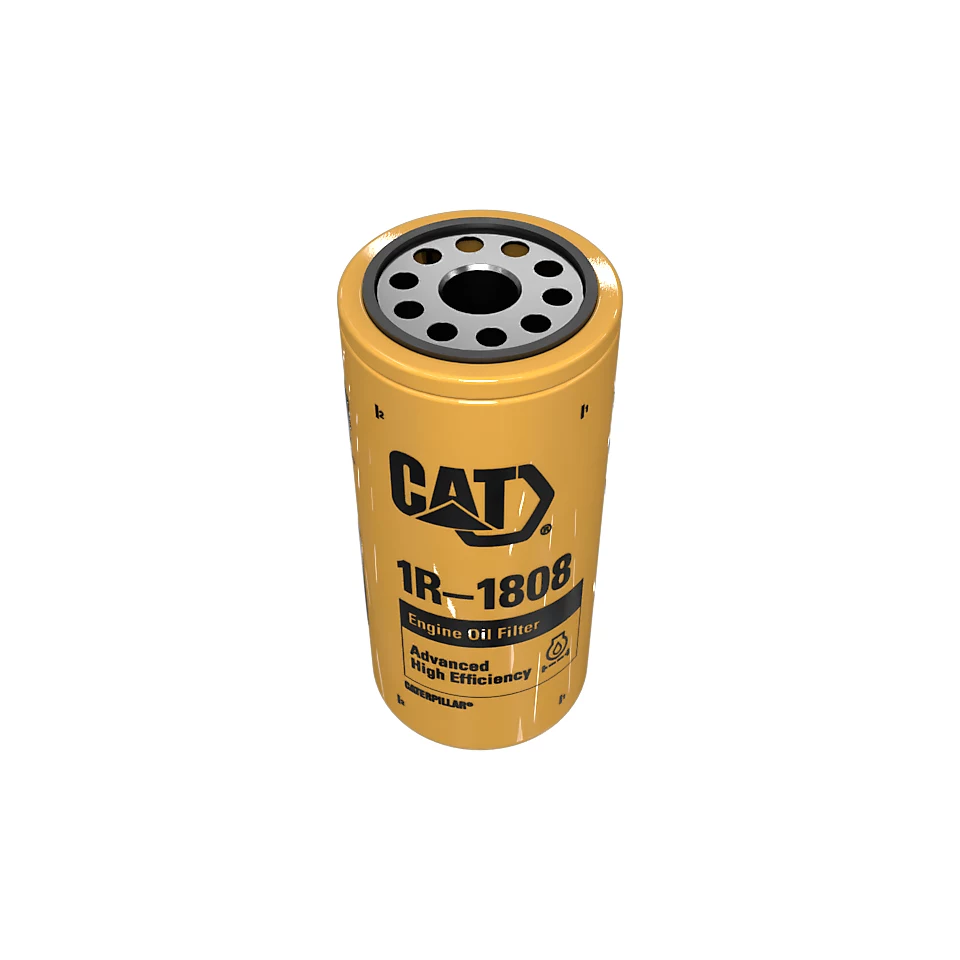
| Cat 1R-1808 | Engine oil filter; Spin-on; identified as Advanced Efficiency | /parts/cat/1r-1808/ | A filter product classified by system, with reference, interfaces and verified fitment |
| Cat 1R-0750 | Secondary fuel filter; Diameter 3.374 in; length 7.146 in | /parts/cat/1r-0750/ | A filter product classified by system, with reference, interfaces and verified fitment |
| Cat 1R-0749 | Secondary fuel filter; Diameter 3.689 in; length 10.571 in | /parts/cat/1r-0749/ | A filter product classified by system, with reference, interfaces and verified fitment |
| Cat 326-1643 | Fuel/water separator filter assembly; Spin-on; a separate family from engine oil filters | /parts/cat/326-1643/ | A filter product classified by system, with reference, interfaces and verified fitment |
| Cat 093-7521 | Hydraulic/transmission oil filter; Standard Efficiency; retain the leading zero | /parts/cat/093-7521/ | A filter product classified by system, with reference, interfaces and verified fitment |
| Cat 1U-3252 | J250 general-purpose bucket tip; J Series; size J250 | /parts/cat/1u-3252/ | A tooth product organized by J size, not by swapping machine names in copies |
| Cat 1U-3302 | J300 general-purpose bucket tip; J Series; size J300 | /parts/cat/1u-3302/ | A tooth product organized by J size, not by swapping machine names in copies |
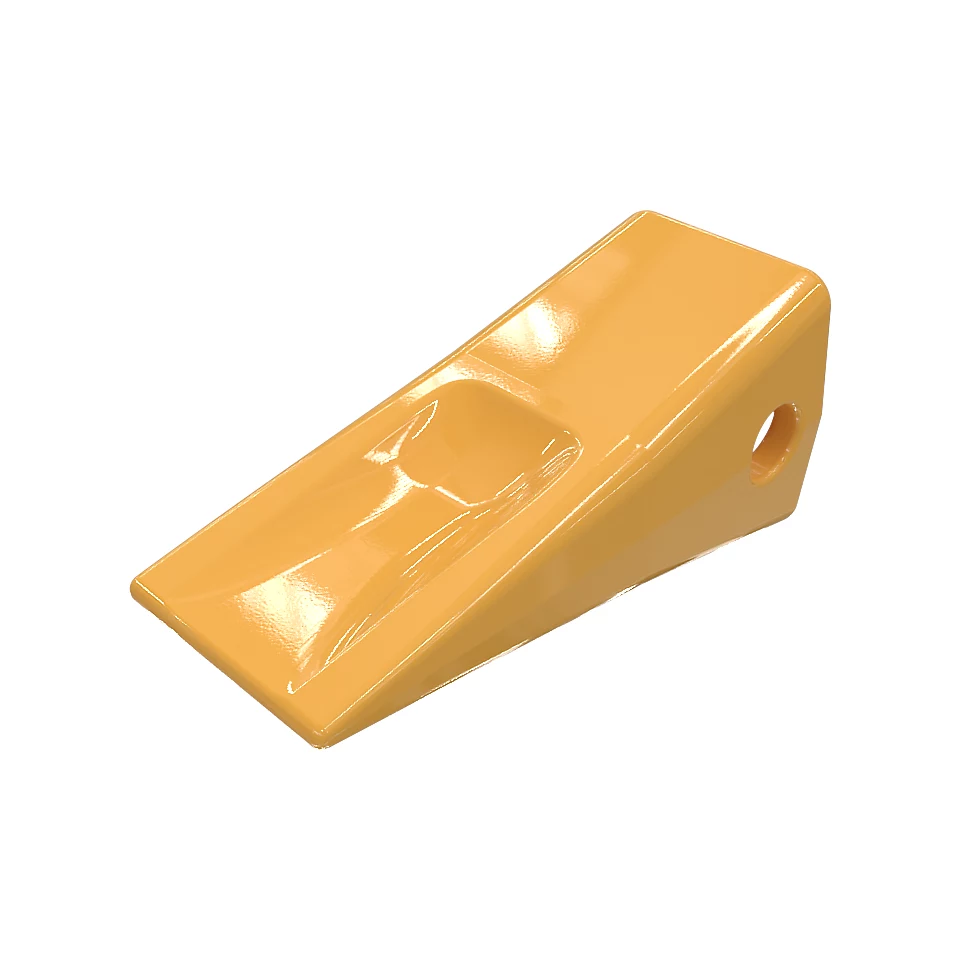
| Cat 1U-3352 | J350 general-purpose bucket tip; J Series; size J350 | /parts/cat/1u-3352/ | A tooth product organized by J size, not by swapping machine names in copies |
| Cat 114-0358 | Grooved bucket-tip pin; A reference pin listed in the OEM data for 114-0359 | /parts/cat/114-0358/ | A pin product with explicit relationships to retainers and tips |
| Cat 114-0359 | J350 tip-pin retainer; OEM description specifies J350 tips and adapters | /parts/cat/114-0359/ | A separate retainer record; set quotations can reference both components |
| Cat 8E-6258 | J300 bucket-tip pin; OEM specifies J300 and use with 8E-6259 | /parts/cat/8e-6258/ | A pin product with explicit relationships to retainers and tips |
| Cat 8E-6259 | Tip-pin retainer; Retainer assembly explicitly referenced by the OEM application note for 8E-6258 | /parts/cat/8e-6259/ | A separate retainer record; set quotations can reference both components |
| Cat 320 | Crawler excavator; 22,600 kg operating weight in the specified OEM configuration | /machines/cat/320/ | Machine hub linking to verified products; do not clone a part detail for each machine |
| Cat 323 | Crawler excavator; 25,000 kg operating weight in the specified OEM configuration | /machines/cat/323/ | Machine hub linking to verified products; do not clone a part detail for each machine |
| Cat 301.7 CR | Mini excavator; Maximum operating weight 1,915 kg in the OEM canopy configuration | /machines/cat/301.7-cr/ | Machine hub linking to verified products; do not clone a part detail for each machine |
| Cat 305 CR | Mini excavator; Maximum cab operating weight 5,754 kg, with long stick and extra counterweight, excluding the bucket | /machines/cat/305-cr/ | Machine hub linking to verified products; do not clone a part detail for each machine |
| Cat H115 GC S | Hydraulic hammer; 90–120 L/min rated flow | /attachments/cat/h115-gc-s/ | Attachment hub linking model, hydraulic and installation records to verified repair parts |
| Cat H120 GC S | Hydraulic hammer; 125–150 L/min rated flow | /attachments/cat/h120-gc-s/ | Attachment hub linking model, hydraulic and installation records to verified repair parts |
Maintain products, references and fitment separately
The product table holds stable identity, brand, seller SKU, name, family, specifications, images, sources and update dates. A reference table connects original and searchable forms to the product and the brand owning the number. A fitment table records machine, serial range, assembly, configuration, evidence and the person who verified it.
Store 093-7521 as text. Search may recognize 0937521 as an alias while the published record retains the original number. Both 1R-0749 and 1R-0750 are secondary fuel filters, but their published diameters and lengths differ. Keep their identities separate; punctuation removal, a dropped model suffix or numerical similarity is insufficient evidence for product deduplication.
Business systems should update stock and quotation information. A pack-quantity change does not automatically require another SEO page. An independently sold kit should have a kit SKU, component list, quantities and installation conditions. An OEM reference should not be recorded as the replacement manufacturer’s own MPN.
Keep products discoverable through filters and pagination
Index useful purchasing categories such as J350 teeth or a documented hydraulic-filter range. Sorting, display counts and temporary query combinations do not all need indexable URLs. Decide which categories merit maintained content before designing crawl controls for temporary facets.
If an already indexed low-value facet needs a noindex directive, Google must be allowed to fetch that directive first; robots blocking does not remove the URL from the index. Consolidate actual duplicates to their representative page, while useful subcategories with different content retain their own identity.
Give list pages distinct URLs, ordinary HTML next-page links and self-referencing canonicals. Infinite scroll or load-more controls should not be the only route to later products. A second page displaying different items should not default to a canonical pointing at page one. Sitemaps should include accessible canonical pages intended for indexing, with modification dates tied to real changes.
Publish complete product groups before scaling
Choose a pilot around actual demand, reliable supply, suitable margins and available evidence. Include a category, representative products, relevant machine or application routes, an identification guide and an enquiry retaining the requested reference. Continue researching incomplete SKUs instead of mass-publishing the same paragraph under different numbers.
After launch, review discovery and crawling by product family, queries bringing visitors and the information provided in enquiries. Impressions without qualified demand call for a review of buyer tasks and offer information. Undiscovered later list pages call for a discovery-path check. Expand according to both search evidence and supply capability.
Organize content and reporting around the catalogue
A 1,200-SKU catalogue does not require 1,200 social posts. A monthly set of four original posts can explain identification, specification differences, fitment checks and packing or dispatch. Publish on Facebook and LinkedIn for eight placements, linking to the appropriate category, product or guide. Prepare the assets first if company pages or a publishing owner are not yet available.
Report useful pages added, index status, search clicks, qualified enquiries and quotation outcomes by family and page type. A new category should help buyers reach the correct product, not simply raise the URL count. Quarterly sales and enquiry evidence should guide expansion into additional brands, systems and model hubs.
Start the architecture discussion with real records
Bring an export containing seller SKU, name, brand, OEM reference, specifications, fitment evidence, photographs and availability. We first establish which rows are distinct products, which numbers are aliases and which fitment relationships are supported. For an existing website, include current URLs and search entry pages so migration mappings can be planned.
UEESHOP provides construction-equipment parts websites, redesign, Google SEO and ongoing content work. The OEM records here explain the method. A client’s product identities, category count and publication sequence come from its actual business data.
Execution sequence and deliverables
| Stage | Work | Output |
|---|---|---|
| Data review | Identify distinct products, packs and aliases; collect fitment evidence | Clean product, reference and fitment records |
| Architecture pilot | Choose a commercial priority group and map category, product, machine and guide pages | Reviewable paths and a keyword map |
| Build and launch | Complete content, pagination, search and enquiries; map existing URLs | Crawlable pages, necessary redirects and enquiry checks |
| Expand by group | Add ranges according to discovery, search and qualified-enquiry evidence | Family-level monthly reporting and an expansion plan |
Purchasing prompts and page work
A parts catalogue lists 1U-3252, 1U-3302 and 1U-3352. How should a buyer distinguish J250, J300 and J350, and what adapter and retention information is needed before ordering?
Observe: The answer differentiates J sizes and returns to product and installation evidence rather than recommending from machine model alone.
Content required: J-size categories, component pages, interface photographs and verified used-with relationships.
A supplier has the same 093-7521 reference in several machine categories. Which record should hold the product specification, and which records should describe verified machine fitment?
Observe: The answer separates product identity from many-to-many fitment without creating duplicate product details.
Content required: A common product record, brand and reference fields, and a sourced configuration-specific fitment table.
Common questions
Does 1,000 SKUs require 1,000 SEO pages?
No fixed one-to-one rule applies. Warehouses, languages, packs and aliases can refer to one product; distinct brands, specifications or kits may merit separate pages. Resolve product identity first.
Should a part have a separate detail page for every compatible machine?
Usually the machine hubs link to a common product detail, with each fitment condition stored separately. Assess a separate page when the actual product and purchasing content are materially different.
References: Google: crawling faceted navigation / Google: pagination and incremental loading / Google: canonical URLs and duplicate content