
Choose the parts business you want to win
Bulk exports of bucket teeth and filters require a different buying journey from an urgent replacement for an overseas repair shop. Distributors ask about range, mixed orders, packing, minimum quantities and replenishment. Repair buyers start with identification, fit, availability and dispatch. Category pages should state the business’s real supply range; product pages should make the individual request actionable.
Group recent enquiries and orders by parts family, country, buyer type, quantity, margin and supply reliability. Start with ranges for which staff can verify the product and obtain evidence. If J-series teeth dominate current enquiries, publish useful tooth, pin and retainer pages before building a largely empty “all excavator parts” catalogue.
Twelve examples: connect the query to the right page
The identities and specifications below come from Cat’s public product information. Each model or reference links to its OEM page. These examples illustrate planning; a supplier’s implementation should use its own stocked products, brands and supporting records. A machine model is a discovery route, while a part number identifies a particular component.
For example, the published Cat 320 and 323 operating weights are 22,600 kg and 25,000 kg in their specified configurations. That establishes separate machine records, not universal compatibility with a filter or tooth. Fitment still depends on serial number, assembly and installation details.
Model and reference examples
| OEM model / reference | Identity or specification | Example query | Page and next action |
|---|---|---|---|
| Cat 320 | Crawler excavator; 22,600 kg operating weight in the specified OEM configuration | Cat 320 excavator parts | A machine hub asks for serial number, component system and old-part photographs before showing the stocked range |
| Cat 323 | Crawler excavator; 25,000 kg operating weight in the specified OEM configuration | Cat 323 replacement parts | Use a separate machine hub; verified shared parts link to the same product page |
| Cat 301.7 CR | Mini excavator; Maximum operating weight 1,915 kg in the OEM canopy configuration | 301.7 CR mini excavator parts | Retain the CR suffix and distinguish machine consumables from attachments |
| Cat 305 CR | Mini excavator; Maximum cab operating weight 5,754 kg, with long stick and extra counterweight, excluding the bucket | 305 CR spare parts supplier | Explain supply range, markets and identification requirements rather than copying the machine brochure |
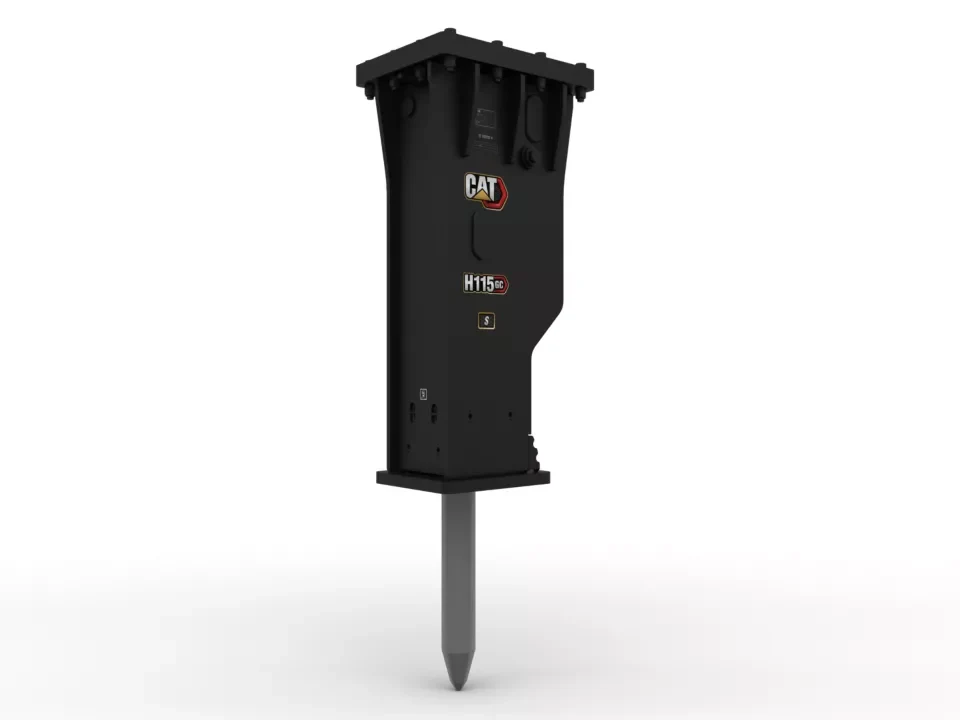
| Cat H115 GC S | Hydraulic hammer; 90–120 L/min rated flow | H115 GC S hammer parts | An attachment-model hub uses 90–120 L/min as identification context; repair parts still need the hammer serial number |
| Cat H120 GC S | Hydraulic hammer; 125–150 L/min rated flow | H120 GC S hydraulic hammer parts | Its 125–150 L/min range differs from H115; organize tool, seal and maintenance information by hammer model |
| Cat 1R-1808 | Engine oil filter; Spin-on; identified as Advanced Efficiency | 1R-1808 oil filter supplier | An exact-reference page states oil-filter use, actual supplied brand and packing details |
| Cat 1R-0750 | Secondary fuel filter; Diameter 3.374 in; length 7.146 in | 1R-0750 fuel filter dimensions | Use published dimensions for identification, then check interfaces, machine and engine information for the quote |
| Cat 093-7521 | Hydraulic/transmission oil filter; Standard Efficiency; retain the leading zero | 093-7521 hydraulic filter | Keep the full reference; link from hydraulic filters and record when availability was checked |
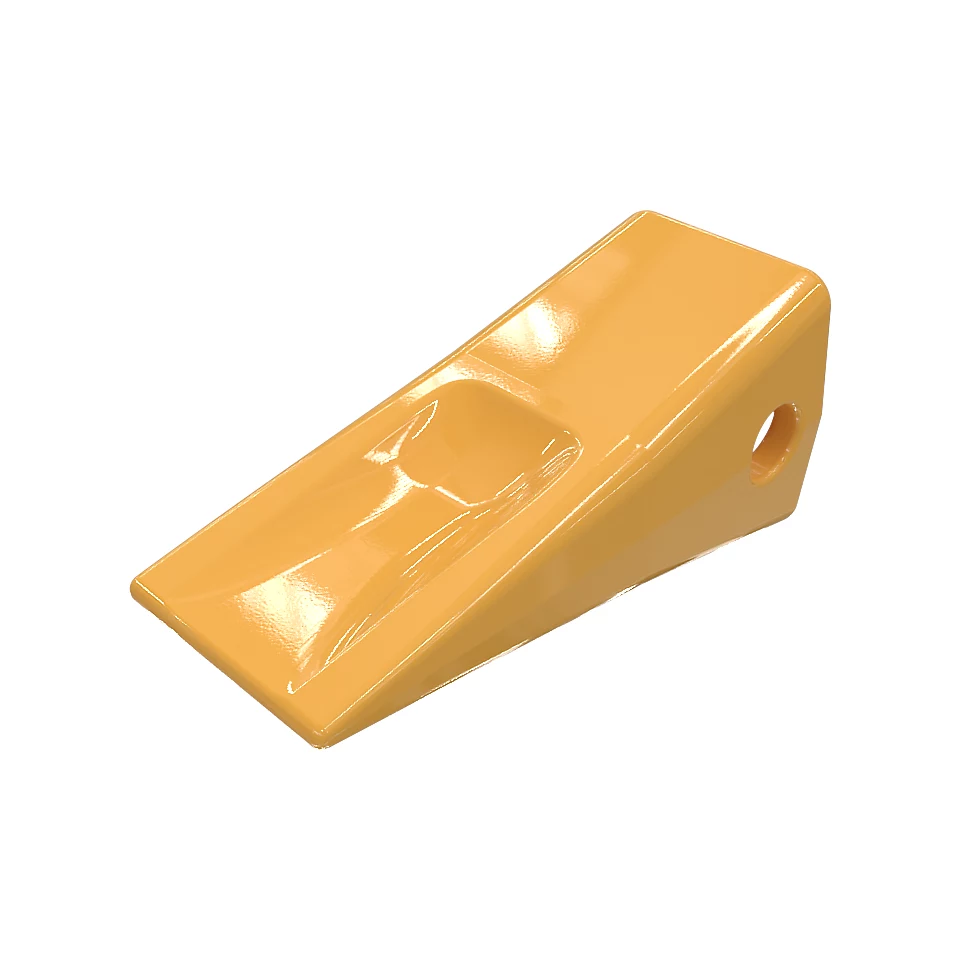
| Cat 1U-3352 | J350 general-purpose bucket tip; J Series; size J350 | 1U-3352 J350 bucket tooth | J350 category → tooth page → adapter, pin and retainer checks → quantity-based enquiry |
| Cat 114-0358 | Grooved bucket-tip pin; A reference pin listed in the OEM data for 114-0359 | 114-0358 tooth pin | A pin page shows grooves and measured dimensions, linked to verified related components |
| Cat 114-0359 | J350 tip-pin retainer; OEM description specifies J350 tips and adapters | 114-0359 J350 retainer | Keep the retainer separate from the pin, preserving each reference in a set quotation |
Answer supplier selection and fitment as separate tasks
A query such as excavator parts supplier needs a range page explaining available systems, brands, bulk supply and contact options. A query such as 1U-3352 J350 bucket tooth belongs on a reference page with size, tooth shape, adapter interface, photographs and packing details. Sending both visitors to a generic homepage transfers the identification work back to sales.
Model searches should lead to a machine hub. A 305 CR hub can list verified available parts and provide an enquiry route for buyers without a number. H115 GC S and H120 GC S identify hydraulic hammers; their repair parts need identification against the attachment itself. Similar carrier weight or hydraulic flow does not establish interchangeable repair parts.
Maintain a keyword map with country, language, buying task, destination page and missing evidence. Begin with part-family, model-plus-part and exact-reference queries, then use actual search data to refine priorities. The example queries here are planning inputs, not measured search-volume claims.
Give each reference page enough information for a quote
The title should identify the product—for example, “1U-3352 reference · J350 general-purpose bucket tip”—and explain whether the supplied item is genuine OEM or a replacement under the supplier’s own brand. Show photographs, key dimensions, material evidence, pack quantities and a fitment-check process. Keep the seller SKU separate from the OEM reference, and make different brands, materials and kits distinguishable.
Carry the selected product, reference and language into the enquiry. Ask for quantity, destination and required date. Where fitment needs confirmation, request the machine and component plates, old-part number, installation position and interface photographs. Sales should date its stock and lead-time confirmation; an unknown price should not be displayed as zero.
The OEM page for 1U-3352 identifies J350 and shows related retention components. That supports a related-parts discovery route. A supplier offering a complete set must still verify its actual adapter, pin and retainer combination. Related products and frequently-bought-together suggestions are not the same as a fitment specification.
Prepare social content without waiting for an API
With an existing company page and a publishing owner, a month’s four posts could cover tooth-number identification, how to photograph 1R-0750 filter dimensions, identifying H115/H120 repair parts, and a genuine packing or dispatch record. Publish each on Facebook and LinkedIn for eight placements, with a relevant destination and campaign tags.
If the company has no page yet, prepare original photographs, English product names, destination pages and the publishing calendar first. A nominated person can create the company pages and publish manually when ready. LinkedIn can emphasize purchasing and technical records, while Facebook can show the parts, packaging and working context. Do not manufacture apparent variety by changing only the number on an advertisement.
Connect visits to sales qualification
Exact-reference searches can enter directly at a product page. Model hubs, selection articles and social content help buyers narrow their request. Retain the landing page, requested number, campaign source and sales outcome for each enquiry. An initial qualified lead should establish whether the request matches the available range; verification, quotation and order follow as separate stages.
Review impressions without clicks, visits without usable requests and references that repeatedly generate fitment questions. Improve the relevant search description, product evidence or enquiry fields. Monthly reporting should separate search clicks, submitted enquiries, qualified leads and sales rather than treating a download or QR-code click as an order.
How UEESHOP supports the work
UEESHOP helps construction-equipment and parts exporters organize product data, build websites and run Google SEO, GEO and content operations. New websites begin with catalogue and enquiry planning. Existing sites are reviewed against the actual range, search entry points and questions reaching sales.
Bring your current website, a genuine product list and examples of recent enquiries to a project discussion. The OEM products in this article are planning references; delivery is based on the client’s own range, export markets and team.
Execution sequence and deliverables
| Stage | Work | Output |
|---|---|---|
| Preparation | Review enquiries, supply records and photographs; choose priority ranges and markets | A keyword, page, evidence and owner map |
| Content and launch | Publish documented categories and product pages; retain reference and source fields | Accessible pages, sales checklists and verified enquiry submission |
| Weekly after launch | Review entry queries, lead quality and repeated questions; distribute prepared content manually | Updated records, publication history and sales outcomes |
| Monthly and quarterly | Compare page and lead results monthly; adjust range and content investment quarterly | Monthly report, quarterly review and next-stage work |
Purchasing prompts and page work
A distributor is sourcing 1U-3352 bucket tips and 114-0358 / 114-0359 retention components. What adapter details, quantities, material evidence and packing information should be confirmed before a quotation?
Observe: The answer distinguishes tip, pin and retainer and checks the actual adapter combination rather than inferring fit from machine weight.
Content required: Separate component identities, drawings, photographs, verified relationships, packing and enquiry fields.
I have an H115 GC S hammer but do not know the repair-part number. Which identification photographs and serial-number details should I send to a supplier?
Observe: The answer treats this as an attachment repair-part enquiry and asks for the hammer’s own identification.
Content required: Plate-location guidance, component photographs, a document-submission route and a technical reply process.
Common questions
What can we publish before obtaining search-volume data?
Start with the real supply range, useful reference pages and identification guides based on actual enquiries. Expand as search evidence develops; commercial value and information readiness both influence priority.
Can one component page list every popular excavator model?
Only list fitment supported by verified records. Where serial ranges or installation conditions are missing, explain what is needed to check them rather than using broad model tags as a substitute.
References: Google: canonical URLs and duplicate content